
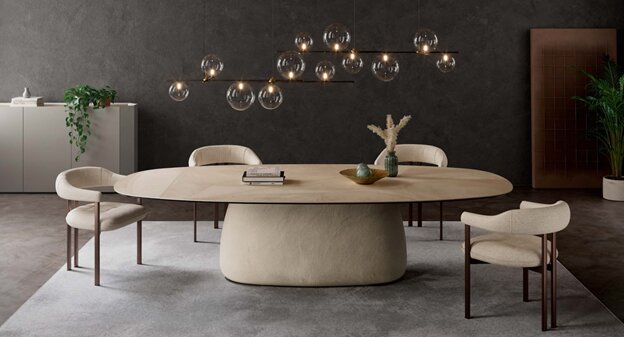
How to Choose the Right Dining Table Shape for Your Floor Plan
There is a quiet significance to the dining table. It’s the one piece of furniture that gathers everyone — family, friends, and guests. It hosts celebrations, busy weekday dinners, late-night conversations, and the quiet mornings when the house is still half asleep. Because of this, the dining table is not just furniture; it becomes a stage for connection.
And yet, most clients choose their dining table based only on looks — the marble top that caught their eye, the sculptural base, the trending colour. These are lovely details, but they’re secondary. The most important decision, the one that dictates the flow of your home, the comfort of your guests, and even the perceived size of your room, is its shape.
The right dining table shape changes everything, and choosing it requires understanding proportions, circulation, seating behaviour, visual balance, and the subtle psychology of how people gather. Once a client learns this, the process becomes easier — almost intuitive.
Let’s explore each shape through the lens of real homes and real lifestyles.
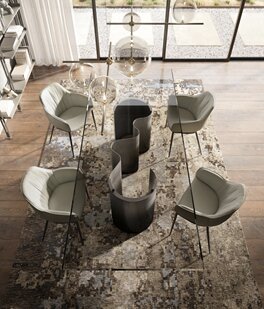
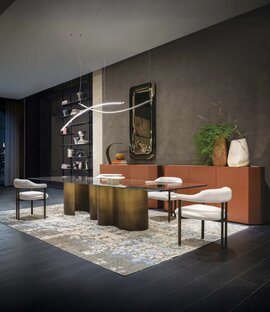
The Rectangle: A Classic Shape That Still Reigns
Most dining tables you see in magazines, show homes, and restaurants are rectangular — not by coincidence, but because this shape naturally mirrors the architecture of most rooms.
Rectangular rooms, long open-plan spaces, and narrow layouts all respond beautifully to a table that echoes their geometry. Even when a space isn’t large, a rectangular dining table can make the room feel anchored, intentional, and oriented.
But why does this shape work so well?
It has to do with traffic flow. A rectangular table creates predictable, straight circulation on either side, which the brain processes as effortless. People can walk behind seated guests without squeezing. Chairs slide in and out easily. The symmetry feels comforting.
Rectangular tables also:
- Seat more people within a modest footprint
- Adapt well to extensions for larger gatherings
- And help visually “stretch” a room.
For open-plan Indonesian homes — where the kitchen, dining, and living flow into one another — a rectangular table provides a sense of order. It quietly divides the space without erecting visual barriers.
Best for: Long rooms, large families, open-plan layouts, spaces where the table must sit parallel to architecture.
The Round Table: The Most Social Shape
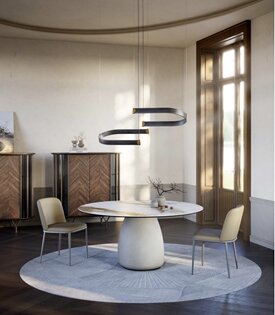
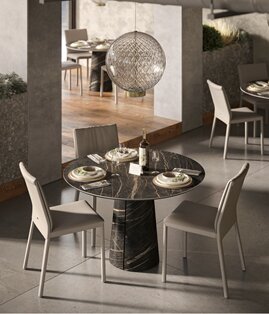
Something magical happens around a round dining table. People lean in. Conversations loop around the circle with no hierarchy and no head of table. Eye contact becomes effortless. Even shy guests feel included.
Design-wise, round tables are incredibly powerful in changing the energy of a room. If a space feels too rigid, too angular, or too formal, the round shape softens it instantly. The absence of corners removes visual heaviness.
But the real advantage is circulation. Round tables eliminate sharp corners, which is ideal for:
- Smaller dining rooms
- Apartments,
- And spaces with multiple doorways or walkways.
Clients often realise they’ve been underestimating how much movement occurs around a dining table. Round shapes allow you to slide around the perimeter fluidly, which makes the room feel bigger.
A common misconception is that round tables seat fewer people. In reality, a 140–150 cm round table seats four extremely comfortably and can even accommodate five. A 160–180 cm table seats six with ease.
Best for: Small rooms, square rooms, awkward spaces, clients who prioritise social interaction and intimacy.
The Oval Table: Elegance With Practicality
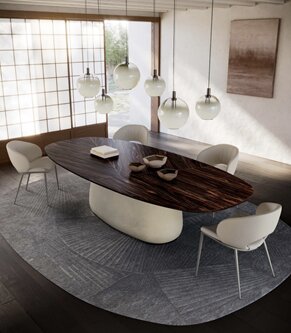
Oval tables are the unsung heroes of dining spaces. They offer the generosity of a rectangular table and the softness of a round one. They elongate the room without looking too rigid. And because there are no sharp edges, they make circulation feel natural.
Oval tables are especially effective in:
- Condo apartments with narrow dining areas
- Long rooms where a rectangle feels too “sharp”
- Spaces where children or older guests use the table (no corners to bump into)
- Dining areas positioned near hallways or entryways.
From an interior design perspective, oval tables are visually forgiving. They soften the straight lines of kitchens, cabinets, and walls. The shape harmonises with curved sofas, rounded rugs, and sculptural lighting.
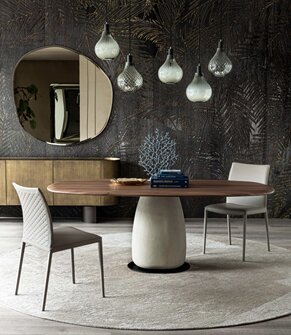
An oval top paired with a pedestal base offers another advantage — no chair legs fighting with table legs, which maximises seating flexibility.
Best for: Homes that want elegance, flow, and softness; narrow or long rooms; families with young children.
The Square Table: Intimate and Balanced
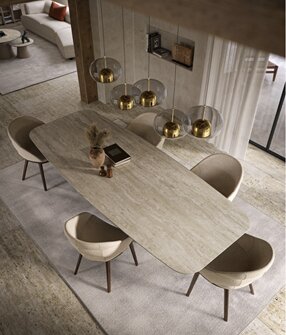
Square dining tables are uncommon, but when used correctly, they create remarkable balance and presence.
Square tables work beautifully in:
- Perfectly square dining rooms
- Corners of open-plan spaces
Squarish apartments - And luxury homes that want a dramatic, sculptural focal point.
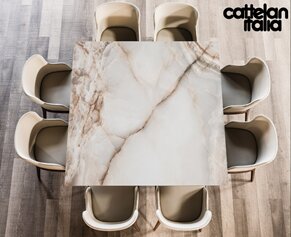
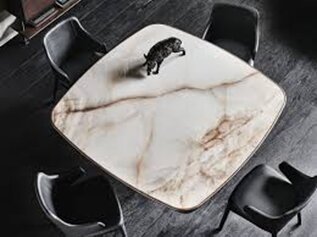
The proportions feel calm and symmetrical. Everyone sits at equal distance, which creates a sense of intimacy similar to a round table — but with a more structured, architectural look. A large square table (140–160 cm) makes a bold, modern statement, especially paired with four oversized chairs or even a bench. It feels luxurious and grounded.
Where square tables struggle is in narrow rooms, where they tend to make the space feel cramped. They need room to breathe.
Best for: Square rooms, symmetrical layouts, intimate dining, modern sculptural interiors.
Understanding Room Flow: The Secret to Perfect Dining Layouts
Choosing the right table shape is part design, part ergonomics. Two key rules shape the experience:
1. Space to move around the table
Ideally, you want 90 cm of clearance from the table edge to walls or furniture, and 110–120 cm if it’s a main walkway. This ensures guests can move freely even when chairs are pulled out.
2. Balancing proportions
The table should never overpower the room nor disappear within it. A long, narrow room welcomes a rectangle. A small square room loves a round. A wide open space can carry an oval effortlessly.
When our clients share their layouts with us, we often discover that shifting from a rectangular to an oval table — or from a square to a round — instantly repairs the room’s visual harmony.
The Role of Bases: Pedestals vs Legs
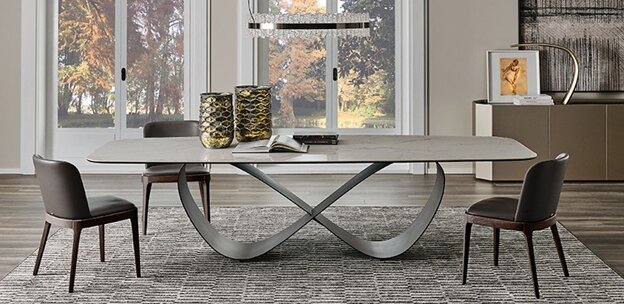
Many clients think only about the tabletop shape, but the shape of its base also helps determine how comfortable the seating actually feels.
- Pedestal bases
- Allow chairs to slide effortlessly
- Create a sense of openness
- Seat more people without obstruction.
- Four-leg bases
- Feel more traditional
- Offer strong symmetry
- But may restrict seating depending on the leg placement.
- Trestle bases
- Provide excellent stability
- Work well for longer rectangular tables
- Create a refined architectural look.
Choosing the right base can completely transform how functional your table feels.
Material and Shape Go Hand-In-Hand
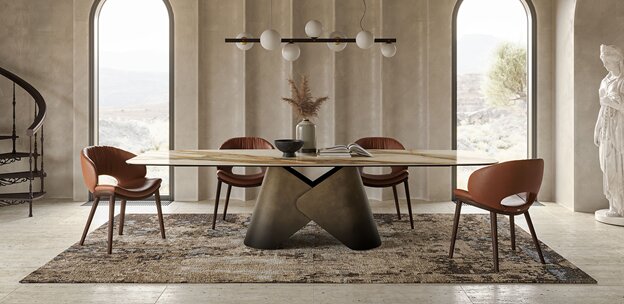
A marble rectangle feels completely different from a wood oval. A glass round table can make a small room feel airy, while a solid wood square table adds grounded sophistication.
In 2026, the most popular combinations we will see are:
- Oval in natural wood for warmth and softness
- Round stone tables for quiet luxury dining spaces
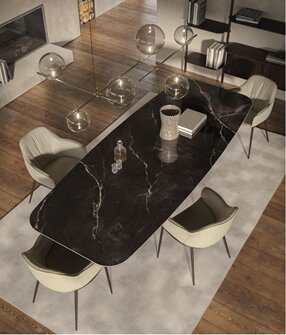
- Rectangular ceramic or marble tops for modern homes
- Square tables in rich wood tones for a contemporary edge
The shape should complement the material — not fight it.
Lighting: The Final Shaping Tool
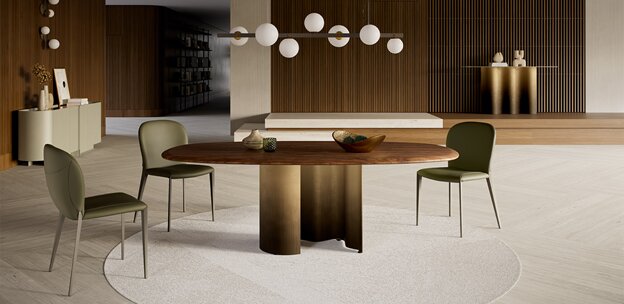
A dining table does not stand alone. Its shape determines the lighting placement above it.
Round tables want a single central pendant — soft, round, glowing. Long rectangular tables look best under linear chandeliers or a cluster of pendants. Ovals offer flexibility: one central fixture or two smaller pendants.
Good lighting helps the table integrate into the architecture of the room.
The Table Is Not Just a Shape — It Dictates How You Live
This is the part homeowners often overlook: how the dining table shape subtly influences behaviour.
Rectangles encourage order and formality. Rounds encourage lingering conversation. Ovals encourage flow, movement, and openness. Squares encourage intimacy and balance.
Choosing a dining table is really about choosing how you want to live — how you gather, how you entertain, how you move through your home each day. The right shape doesn’t just fit your room; it supports the life you imagine within it.
If you’d like guidance in finding the dining table that suits both your floor plan and your lifestyle, our Melandas showrooms are always ready to welcome you. Our design consultants would be delighted to help you explore shapes, materials, and layouts to find the perfect match for your home.