
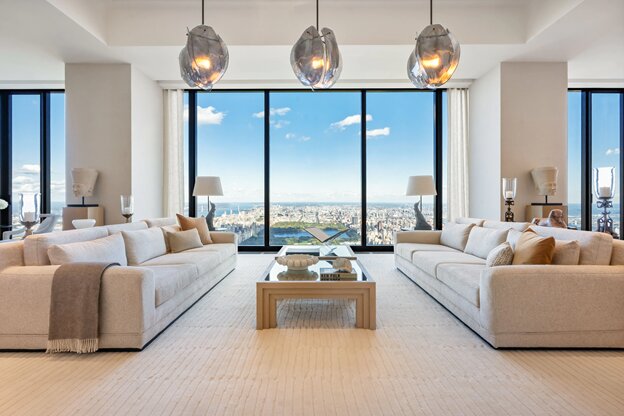
The Art of Layering Textures: Elevate Your Interiors with Simple Styling Tricks
Most people think the secret to a beautiful home lies in colour palettes or furniture choices. But if you quietly study the homes that stop you in your tracks — the ones that feel expensive without trying, the ones that make you exhale the moment you walk in — you’ll notice something else entirely.
They aren’t defined by colour.
Or layout.
Or symmetry.
They’re defined by texture.
Texture is the invisible luxury — the difference between a home that feels “styled” and a home that feels designed. It’s what makes a room feel touchable, dimensional, intimate, warm, or architecturally interesting. And yet, most homeowners overlook it completely.
Designers don’t.
Stylists don’t.
Luxury hotels definitely don’t.
Texture is the silent force that creates emotion and depth. When you learn how to use it, your home transforms — even if you change nothing else.
Let’s explore how the world’s best interiors use texture, and how you can recreate the same feeling in your own home.
Texture Starts With the Emotion You Want Your Home to Evoke
Before picking fabrics or finishes, ask yourself: How do I want this room to feel?
Warm and cozy? Cool and sculptural? Airy and light? Quietly luxurious? Minimal but inviting?
Each emotion aligns with different textures. For example:
- Calming → soft linens, matte ceramics, raw wood.
- Luxurious → velvet, marble, brass, thick weaves.
- Cozy → boucle, chunky knits, wool rugs.
- Modern → glass, smooth leather, polished metals.
Remember that texture is emotional architecture.
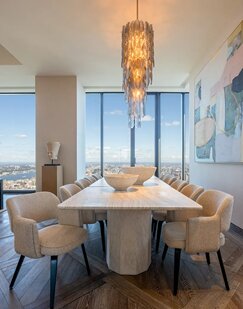
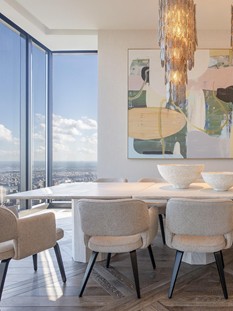
Start With Your “Dominant Texture” — the Foundation Layer
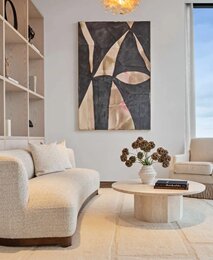
Every room has one texture that dictates the overall mood. This is usually the largest upholstered surface — your sofa or lounge chair.
- A linen sofa → relaxed, breathable, beachy.
- A velvet sofa → moody, glamorous, warm.
- A boucle chair → tactile, soft, comforting.
- A leather sofa → structured, sleek, timeless.
Think of this dominant texture as your “texture anchor.” Everything else should be designed to play with, contrast, or enhance it — not fight against it.
Pro tip: If you’re unsure what your dominant texture is, step back and squint a little at the room. Whatever your eyes land on first is your anchor.
The Second Layer: Opposites Attract
One of the biggest secrets in interior styling is this:
- If your main texture is smooth, add something coarse.
- If your main texture is soft, add something structured.
- If your main texture is matte, introduce something with sheen.
This creates tension — the good kind. The kind that feels luxurious and intentional.
For example:
- Linen sofa + wool rug
- Leather sofa + thick-knit cushions
- Velvet sofa + matte ceramic vases
- Boucle chair + marble side table
- Smooth stone table + textured rattan baskets
Design is emotional rhythm. Your eyes need contrast to feel engaged.
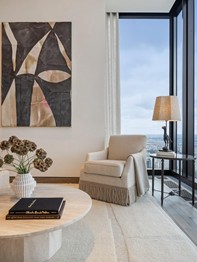
Layering Through Nature: The Most Foolproof Approach
Nature creates perfect texture pairings — and interior designers borrow from it constantly.
a. Wood
Grounds a space. Tells a story. Adds organic heat. Lighter woods feel airy. Darker woods feel intimate. Using two tones makes the room feel layered and lived-in.
b. Stone
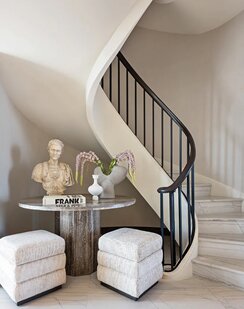
Adds elegance and permanence. Honed travertine is soft and warm. Polished marble is rich and dramatic. Both elevate a room instantly.
c. Ceramics
Add artisan soul. Their imperfect surfaces balance clean-lined furniture.
d. Woven fibres
Rattan, cane, seagrass — especially relevant in Indonesian interiors.They add texture without heaviness. Nature never uses one texture alone — and neither should your home.
Texture in Fabrics
If you look closely at high-end interiors, you’ll see a remarkable consistency: they always layer fabrics.
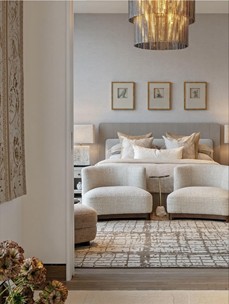
A well-designed living room often uses five to seven different fabric textures:
- Upholstery
- Rugs
- Cushions
- Throws
- Drapes
- Ottomans
- Accent chairs
And yet, nothing looks messy.
Why?
Because textures are chosen within the same emotional palette. A quiet luxury living room might feature:
- Linen sofa
- Wool rug
- Boucle ottoman
- Velvet cushion
- Ceramic lamp
- Brushed brass lighting
Remember to use different textures to evoke the same emotion.
The Rule of “High-Low Texture”
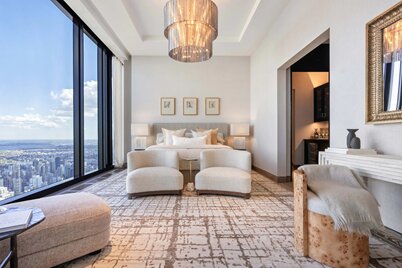
Texture lives on different planes — horizontal (rugs, tables), vertical (curtains, walls), and mid-height (sofas, chairs). When these planes have varied textures, a room feels layered.
Imagine this progression:
- Soft rug underfoot
- Structured sofa fabric at mid-level
- Matte ceramic accessories on the table
- Sheer curtains filtering the light
Your senses experience texture at every height — which is why a room feels more complete.
Texture Isn’t Just Surface — It’s Sound, Light, and Movement
Luxury hotels master this by designing texture into unexpected places:
- The sound of curtains brushing softly (fabric choice matters)
- The way light diffuses across a matte wall
- The rustle of greenery
- The shadow play from ribbed glass
Texture is multi-sensory. Even scent plays a role. A fragrance diffuser adds an invisible textural layer — warm, airy, fresh, or grounding — completing the atmosphere.
Using Texture to Fix “Flat” Rooms
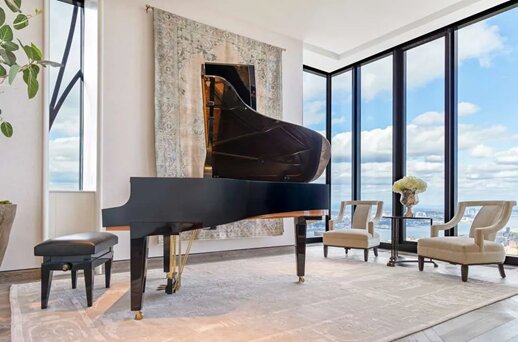
Many clients come to Melandas saying: “My room looks fine, but it doesn’t feel alive.”
Usually, the room has:
- Smooth walls
- Smooth floors
- Smooth furniture
- Smooth décor
Smooth + smooth + smooth = flat. Adding these textures instantly transforms the space:
- A woven rug
- Textured cushion covers
- Boucle accent chair
- Matte ceramic vase
- Ribbed glass décor
- Linen or cotton drapes
Texture adds depth without adding clutter.
Advanced Designer Trick: Micro-Textures
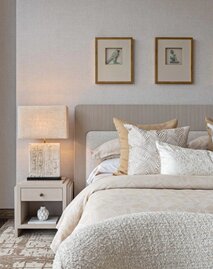
Micro-textures are subtle but powerful. They’re small enough not to dominate but distinct enough to create richness.
Examples:
- Slubbed linen
- Ribbed ceramics
- Hammered metal trays
- Rough-edge stone coasters
- Stitched leather accents
- Embroidered cushions
They photograph beautifully and elevate a room in quiet, sophisticated ways.
Lighting + Texture = Magic
You can have the best textures in the world — but if your lighting is wrong, no one will notice.
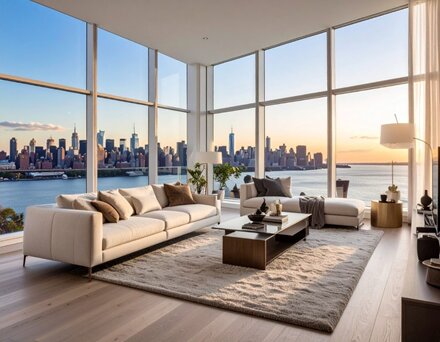
Warm lighting enhances textures by casting shadows and highlighting surface variation.
- Boucle looks richer.
- Velvet looks deeper.
- Stone looks warmer.
- Wood looks more dimensional.
- Cold white light flattens everything.
- Warm white brings it alive.
This is why luxury hotels always use warm lights — it transforms texture into atmosphere.
How Many Textures Should a Room Have?
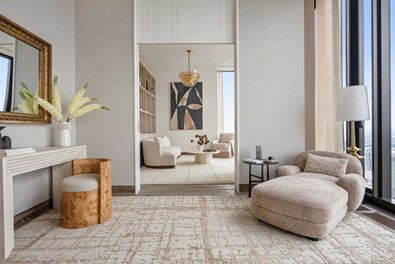
Enough to feel layered, not enough to feel chaotic. A simple guideline designers use:
- 3 textures minimum
- 7 textures maximum
- The sweet spot for most high-end interiors? 5 textures.
It looks intentional, curated, and balanced.
Let Your Textures “Speak” to One Another
Textures don’t just coexist — they interact.
A marble coffee table looks colder beside a leather sofa
…but looks warmer beside boucle.
A chunky wool rug looks rustic next to light oak
…but looks luxurious next to dark walnut.
Choose textures that enhance each other’s qualities.
Texture Should Reflect Your Life, Not a Showroom
The most beautiful homes combine elevated textures with personal ones:
- The linen throw you’ve had for years
- A ceramic piece from a Bali artisan
- A worn leather notebook on your desk
- Chipped pottery you love
- A scented candle marking a memory
Your textures should feel lived-in, not staged.
Ready to Transform Your Home Through Texture?
If you want to experience the magic of texture layering, explore our product catalogs online— from plush boucle chairs to sculptural stone tables. Browse from home, discover what speaks to you, and start creating a space that feels rich, tactile, and beautifully alive.